Gallery Talks at the Met Cloisters the Metropolitan Museum of Art 23 De Diciembre
Carly Withal, the managing horticulturalist at the Met Cloisters has, over the grade of her career, sought to merge the worlds of art and nature. When she began working at the museum 10 years agone, she was blown abroad by the intimacy of the iv, sectioned-off medieval gardens, their carefully curated plant collections, and how they corresponded to the lore and mythology of the collection's sculptures, tapestries, illuminated manuscripts and other treasures.
We got on the phone with Still to discuss the ins and outs of life every bit a museum horticulturalist, how she got into the field, and what visitors to the Met Cloisters tin can expect in the coming months—including a bursting vacation display, complete with bay laurel, polished apples, and fragrant holly, beginning December 16. Read on to discover out more, below.
How did you get interested in horticulture in the get-go identify?
That's a great question. My background actually was in printmaking. I studied at SUNY New Paltz, and I got my Bachelor of Fine Arts and focused in printmaking. I think through my art exercise, I became interested in plants. A lot of my work was only abstract and organic. Then I started looking at plants for creative inspiration, so I idea: "Oh, I bet it would be really great to learn more about these."
A family unit friend of mine had a gardening business, so I just chosen her 1 day—it was the summer, I was off from college—and I just said, "Hey. I'm interested in learning more than about gardening. By chance would you lot be looking for some new members on your coiffure?" And she hired me and I fell in love with the work almost instantaneously.
I remember information technology's like most gardeners. One time yous showtime, it'southward but this lifelong relationship that you desire to keep developing. I felt like it was a calling. The quiet, meditative side of gardening is what I really like.
I never really realized when I started what a earth of work there actually is. I was in upstate New York and loading pallets of soil and mulch into the back of a pickup truck. It was really, really tough piece of work. But when I came into the urban center and discovered the Botanical Gardens and but this whole other industry of work, then I realized that information technology really could be a profession.
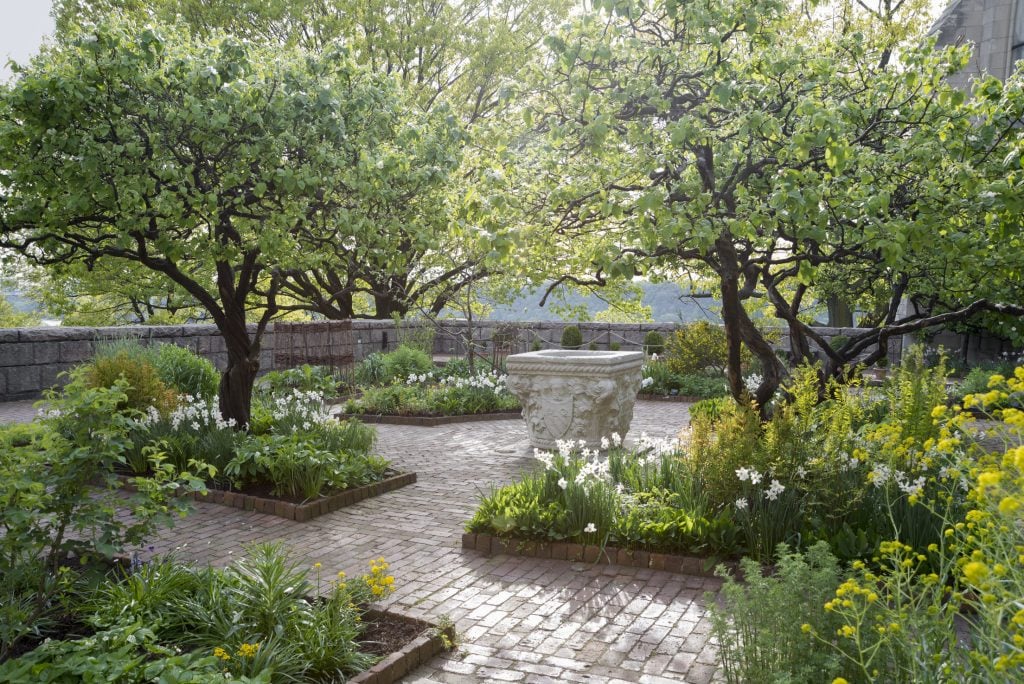
The Bonnefont herb garden. Photo courtesy the Metropolitan Museum of Art.
How did you end up at the Cloisters?
I feel but really lucky. At the time, I had moved to Brooklyn and was interning at a newspaper mill in a print store, and actually wanting to get my hands in the soil, but missing gardening. And I was looking for work on NYFA [the New York Foundation for the Arts]. I found this listing at the Metropolitan Museum of Fine art, and I thought, "Oh my God. This sounds amazing." I'd never visited the Cloisters, simply in the job description, they described the orchard maintenance, planting and maintaining the gardens, and greenhouse work. It was a part-fourth dimension position, but I idea, "This is a really beautiful fusion between the two things that I beloved: art and gardening."
So of course I applied, and then came to visit the museum before I had my interview. I was just blown away past these small, intimate spaces. The adult female who interviewed me was showing me around and at that place's this beautiful petty shed where they dry herbs and the collections of plants were just incredible. And I just thought, "What a gem this place is."
I was and then nervous. But I retrieve at the time, the woman who was in charge of the gardens, Deidre, probably liked me because I had a background in fine fine art and really gravitated towards the herb garden. She was an amazing plant historian and really taught me this earth of storytelling. The lore was where her strength was.
I was over the moon when they offered me the position. I felt like information technology really transformed my life in so many ways. It was a very humble, three days a week, seasonal job, but then it grew from at that place.
In what ways did it grow? And how did your research and knowledge of the infinite begin to shape your office?
There's really only three positions in our tiny picayune department. And the woman who had the assistant position left shortly afterwards I started. And then that total-time, year-round position opened upwardly really quickly and I applied for that and I got the promotion.
Deirdre Larkin was managing the gardens at that point. I retrieve she really encouraged me to learn all the plants. So I was also taking classes at the New York Botanical Gardens to get my certification in horticulture. She told me to take coursework then also gave me so much material to read, even though obviously information technology wasn't required. Only she knew my curiosity was at that place.
Once yous outset going in the herb garden, at that place are hundreds of plants, just you want to learn everything near each one. So I was reading similar crazy on the train. At the time, there was also the Medieval Garden Enclosed blog, which was where Deirdre put her energy, into writing about the lore and the history of all of the plants. I only ate that upwards.
Each garden—there are three small-scale, intimate gardens here—tells a unlike story and they have a different group of plants that we're cultivating in them. And so I wanted to be familiar and comfortable working in each garden infinite. I was trying to shape my way hither, and mold myself into someone that would be useful.
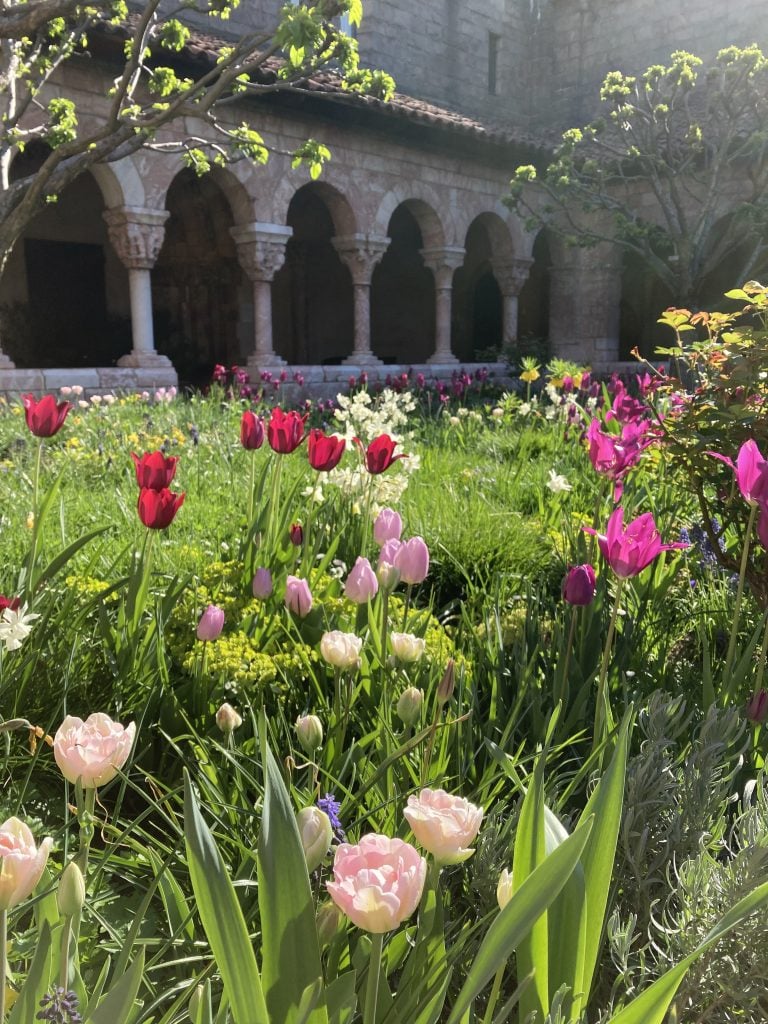
The Cuxa Cloister at the Met Cloisters. Photo courtesy the Metropolitan Museum of Art.
What were the challenges of becoming the kind of horticulturalist you wanted to be?
In that location's this thought of not wanting to leave a trace. That'southward how I like to view the gardens. Yous want to have a hand in them, but you lot don't desire to always show that, correct? It should wait effortless.
That was the master thing, merely I was given a lot of room to grow. When Deirdre left, I worked under Caleb Leech, and he was and so talented. He was a real plants homo. Over time, I gained a lot of conviction in my work as a gardener while working with him and tried non to take information technology all as well seriously. At the end of the twenty-four hours, they're just plants. They're very forgiving.
So all this led me to where i am now, as the manager, which feels kind of funny. And I but hired two new awesome women gardeners and they're great.
When you say you want to brand the most cute gardens, what does that mean to you?
Nosotros have herbs dotted through all of the spaces in the ornamental garden and through the herb garden, and for me, the beauty is really in the fragrance. Having fragrant flowers that people can interact with is really important. Upstairs in the ornamental garden, I e'er talk about the heritage David Austin English Roses. In that location's lavender all over the place up there.
Information technology is also all most having cute flowers throughout the season. That starts with our bulb display, which bloom in early on spring. It's overwhelmingly beautiful. Nosotros have all of these amazing tulips, fabulous alliums, an explosion of crocus around that time of twelvemonth. And of course daffodils. All the favorites are up there—dianthus, foxgloves, delphiniums, iris, the martagon lilies, astrantia. Nosotros've got all sorts of cute perennials upwards there.
Chocolate cosmos is one of my favorites that's got a fabulous fragrance as well. A beautiful flower form, and a really nice contrast with that dark, rich, kind of blood blood-red. And then we've got some squeamish, silvery foliage with the artemisias.
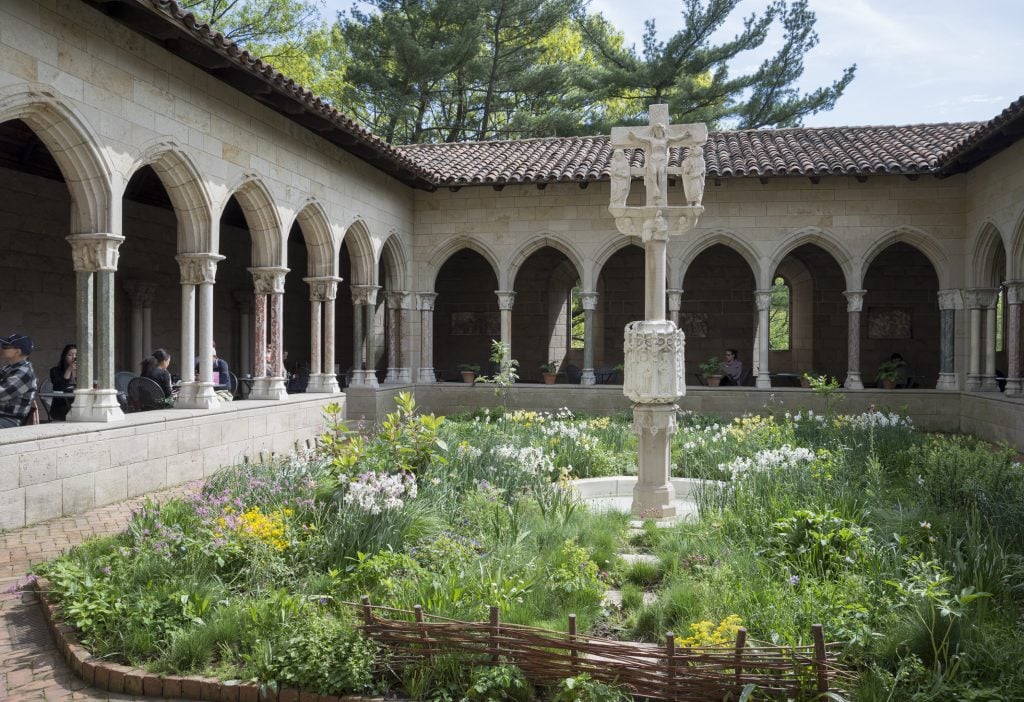
The Trie Cloister. Photo courtesy the Metropolitan Museum of Fine art.
That all sounds actually beautiful.
That's what people gravitate towards because there are more flowers throughout the season upstairs. Merely then the herb garden in the jump is overwhelmingly cute. We have lots of other garden favorites down in that location likewise, over again the foxgloves will be in full bloom and the valerian and the woad, used for the famous bluish dye.
And then the Trie-en-Bigorre garden is magical also. That was replanted almost five years ago we're still working our way into that space. We simply planted a bunch of species tulips, more than crocus, more irises, lots of dianthus. The adonis is amazing. There's just so many bound-blooming plants there that are likewise inspired by the Unicorn Tapestries in the collection.
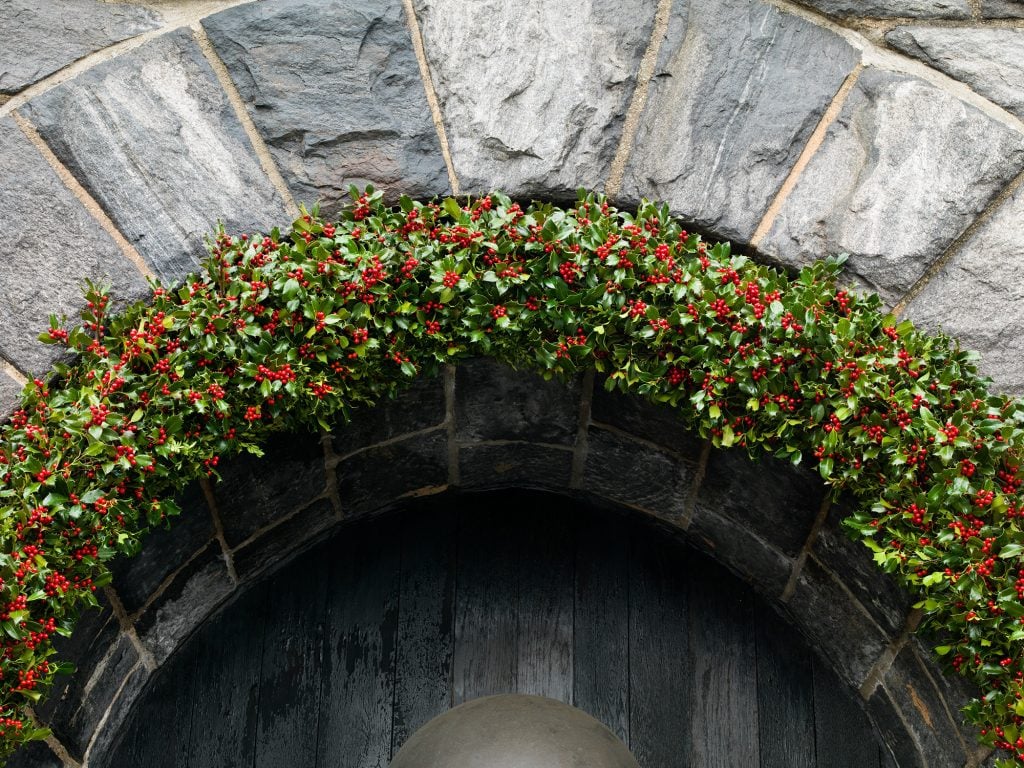
A holly arch during the 2013 holiday display at the Met Cloisters. Photo courtesy the Metropolitan Museum of Fine art.
Are there any other objects in the collection that have inspired you in your garden work, outside of the unicorn tapestries?
Oh yeah. Without a doubt, the Book of Bloom Studies, which was recently caused, is one of the about beautiful things I've ever seen. Nosotros got to flip through—I didn't touch the pages of class—but our technician flipped through the pages. It almost looks similar a little field guide of flowers that are so beautifully studied, they're so easily identifiable. To me, that'south merely a existent inspiration. It feels and so timeless. These plants are still here and we can still detect all of this beauty and inspiration in the same things.
Y'all'll find nosotros grow every single flower in [the book]. So I beloved to think, "What was this artist thinking about? And where was he finding these plants?" We had some herbals [books on natural remedies] that were out on display, and those are besides wonderful to become through. The manner that a nice chunky root of an allium is depicted. You lot could pull that out of the garden, and it would look exactly like that.
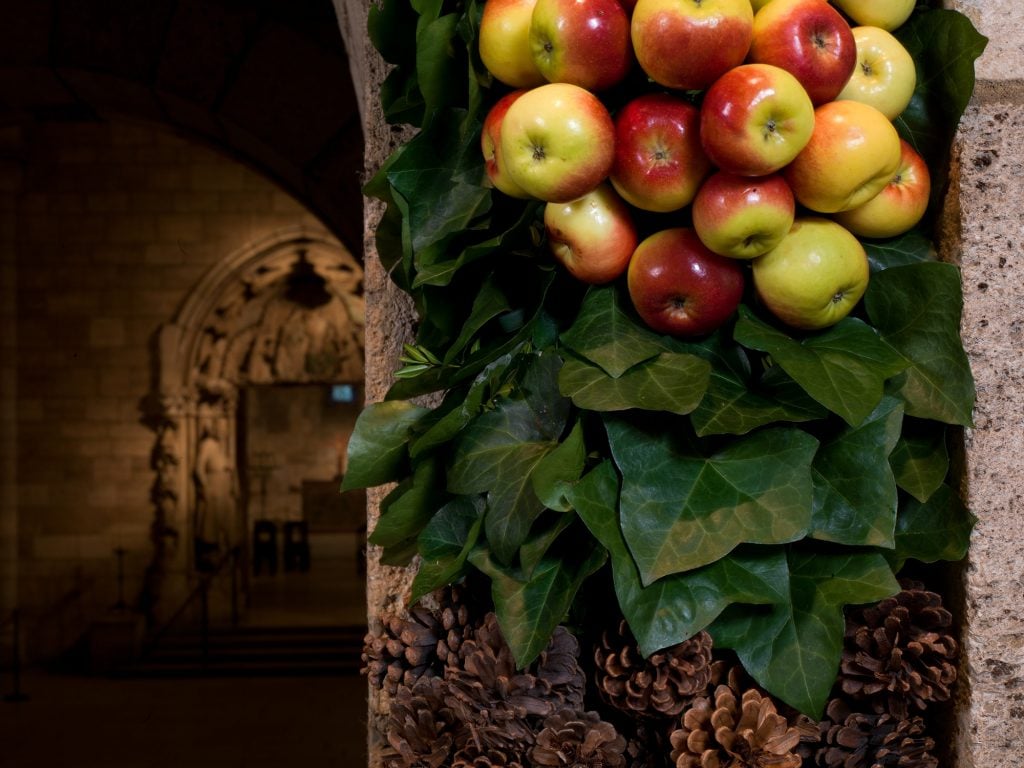
Photo courtesy the Metropolitan Museum of Art.
What does a typical mean solar day wait like for you lot and your team these days?
We commencement at 8 AM. We have a lot of potted plants, citrus and myrtles, bay laurel, lots of stuff like that. That's all been moved inside. Piece of work this time of yr shifts more than towards potted plant maintenance and making sure everything's well watered, that at that place are no yellowing leaves. We call that our morning round, betwixt 8 and 10, only getting everything ready for the public.
Then of class we do a pass through of the gardens. Right now, we're doing our big cutback of plants. And then lots of maintenance gearing up for the wintertime, cutting all of our perennials back. Nosotros merely finished planting 15,000 bulbs. We're getting the beds prepped for that, then we'll plant those in, and make certain everything'southward tucked in.
I even beloved sweeping the garden. To me it feels similar a really important thing. Of course it's the fall and leaves start dropping. But once again, finding that balance of making things all the same wait neat, and real, and well-maintained is the focus right now.
Then we gear up for our holiday decorations, which volition start in the next few days. And so when we get dorsum from Thanksgiving, we'll look at lots of potted plants… lots of cyclamen, rosemary, hellebores, fragrant jasmine. Nosotros desire to just fill that gallery space with potted establish material.
Then we'll do the big installation with the arches, and nosotros'll utilise fresh English holly, fresh apples, fresh ivy, and hazelnuts. That will go up in the middle of December, which is exciting. Nosotros're picking and washing ivy leaves, and polishing apples and doing all sorts of super-obsessive repetitive work—out of love.
Follow Artnet News on Facebook:
Want to stay ahead of the fine art earth? Subscribe to our newsletter to get the breaking news, eye-opening interviews, and incisive critical takes that drive the conversation forward.
Source: https://news.artnet.com/art-world/carly-still-2039062

Post a Comment for "Gallery Talks at the Met Cloisters the Metropolitan Museum of Art 23 De Diciembre"